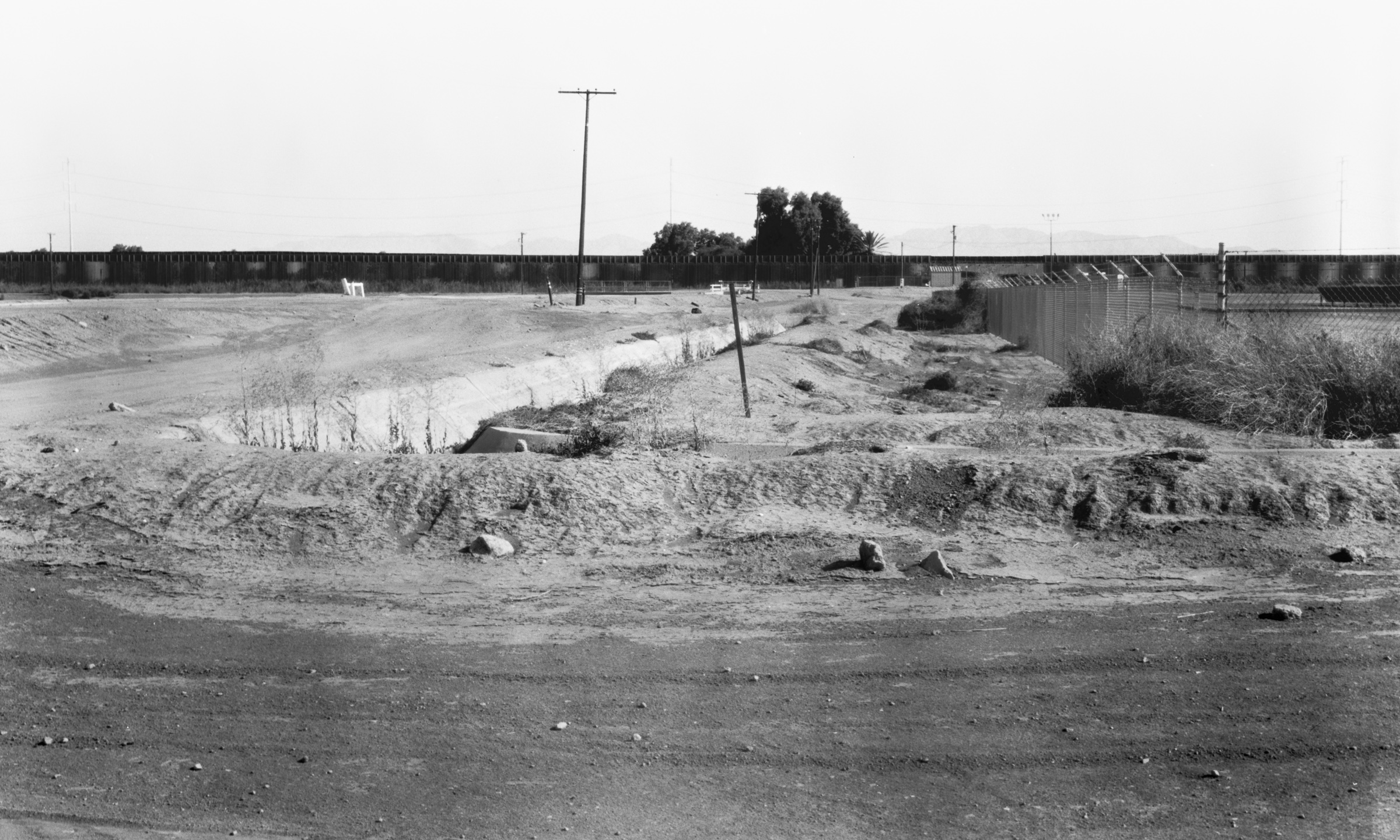
Borderlandscapes
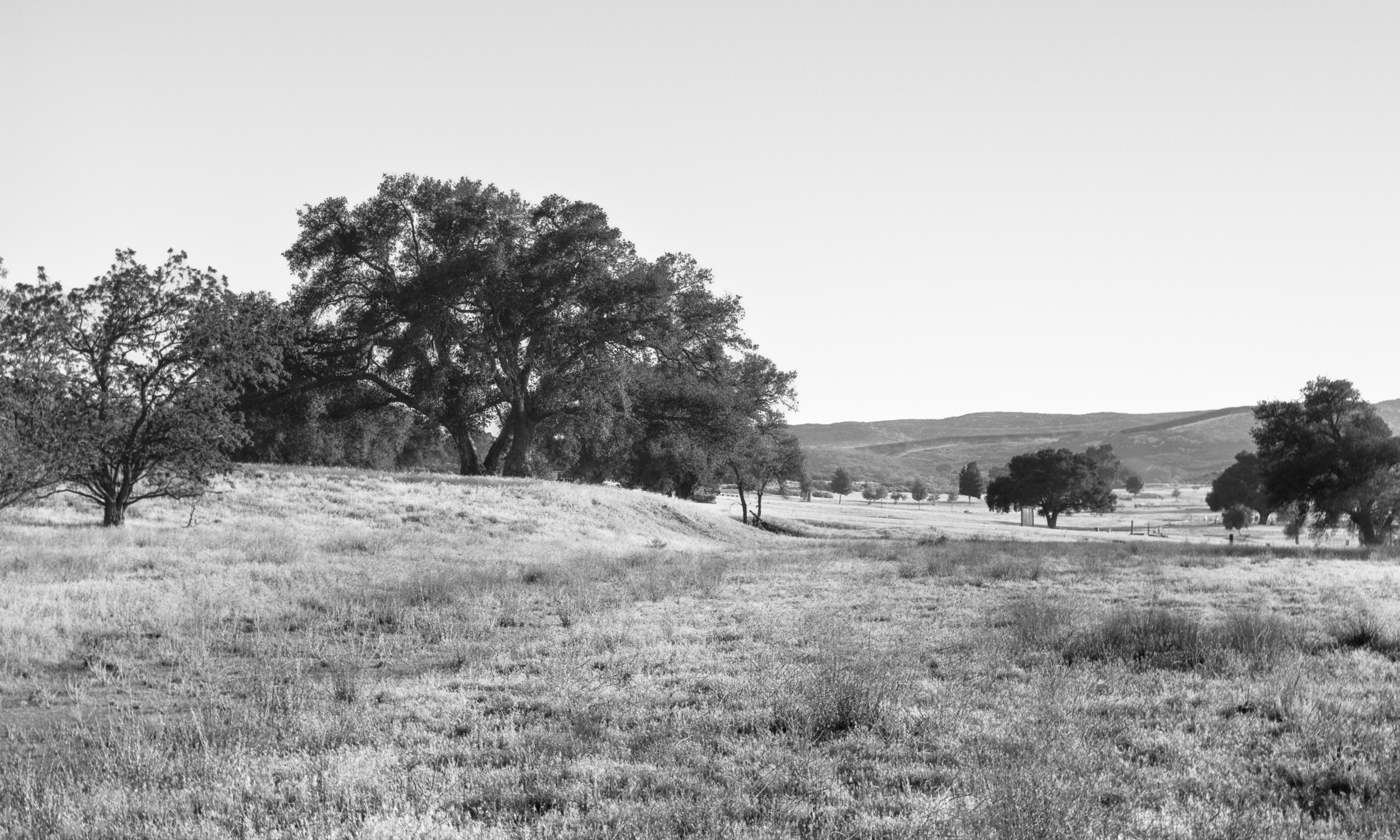
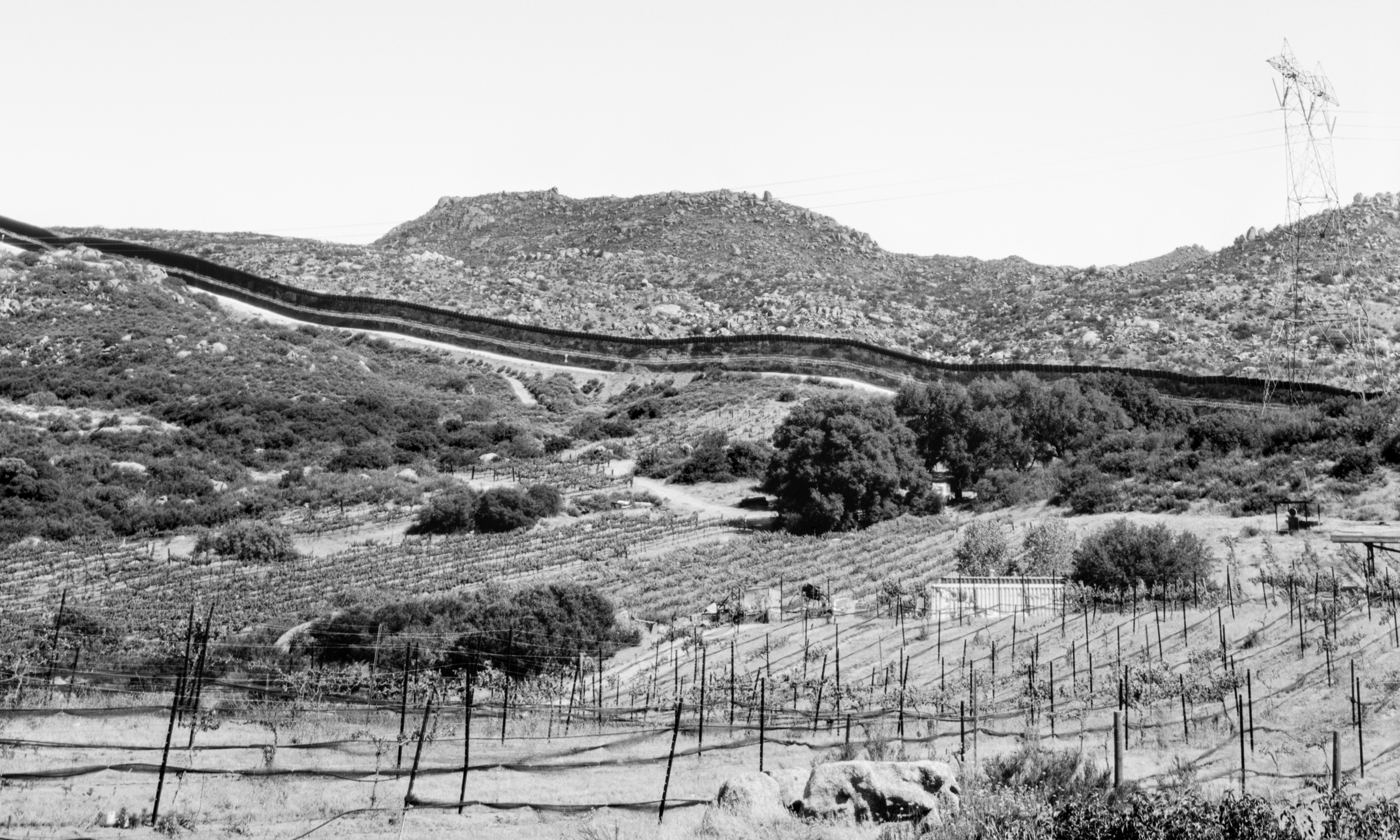
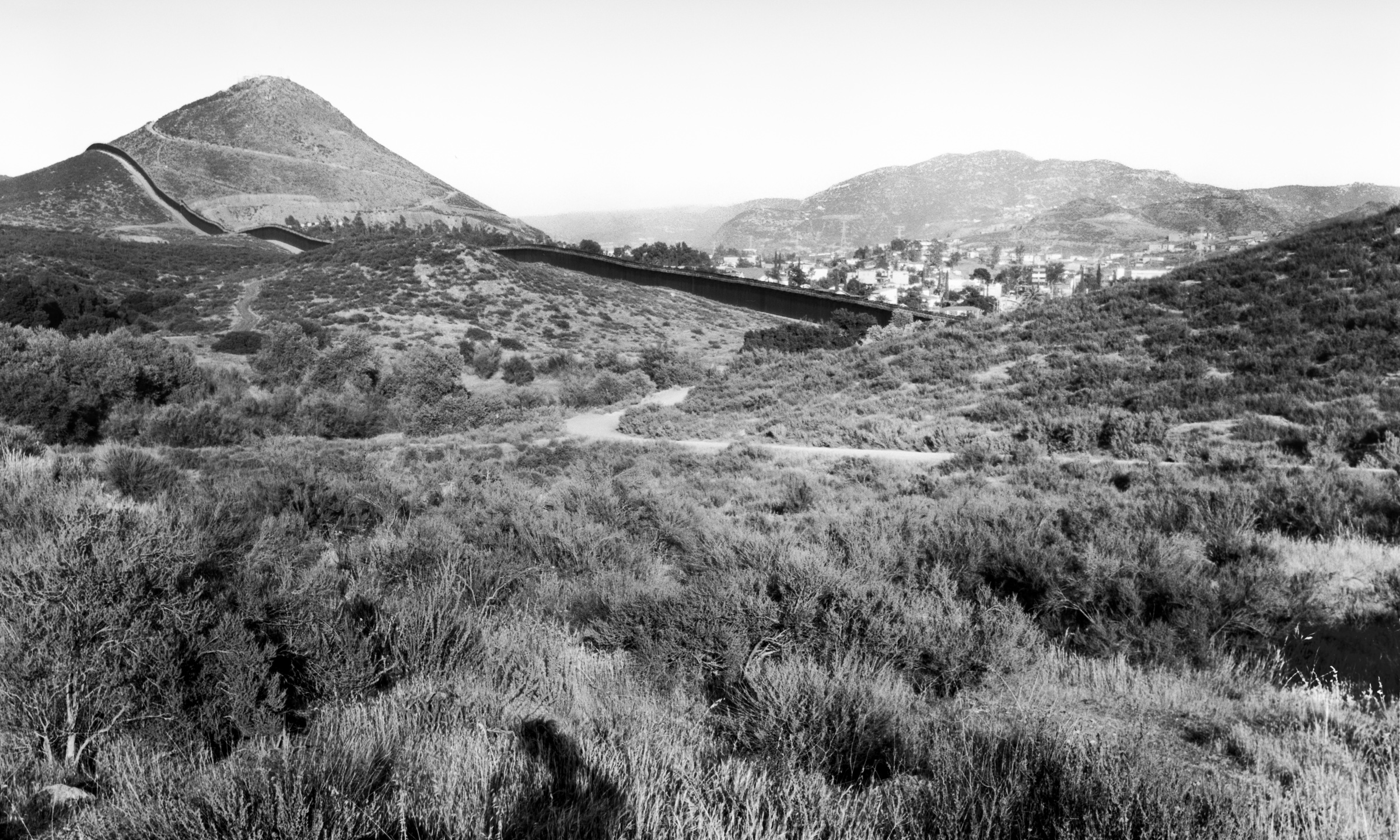
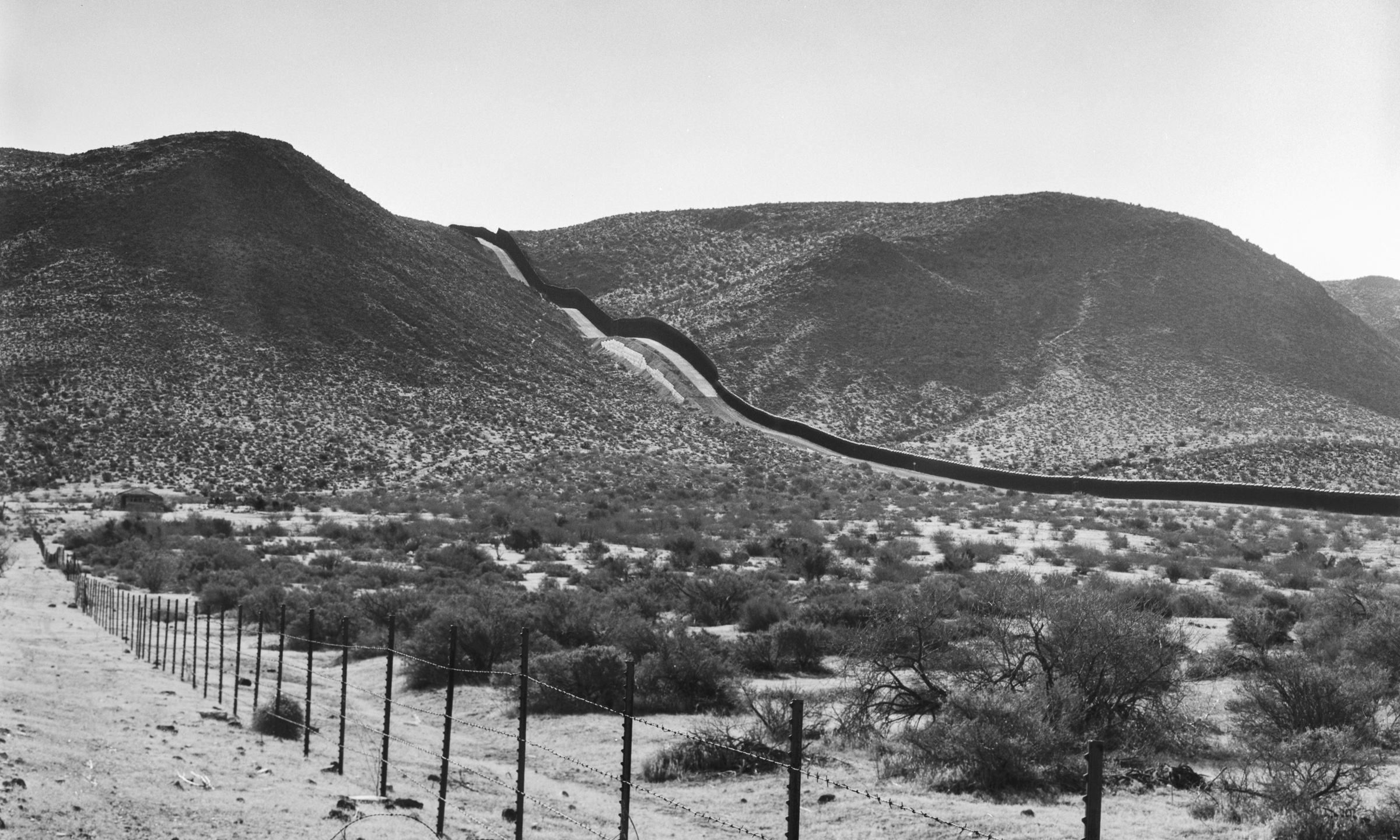
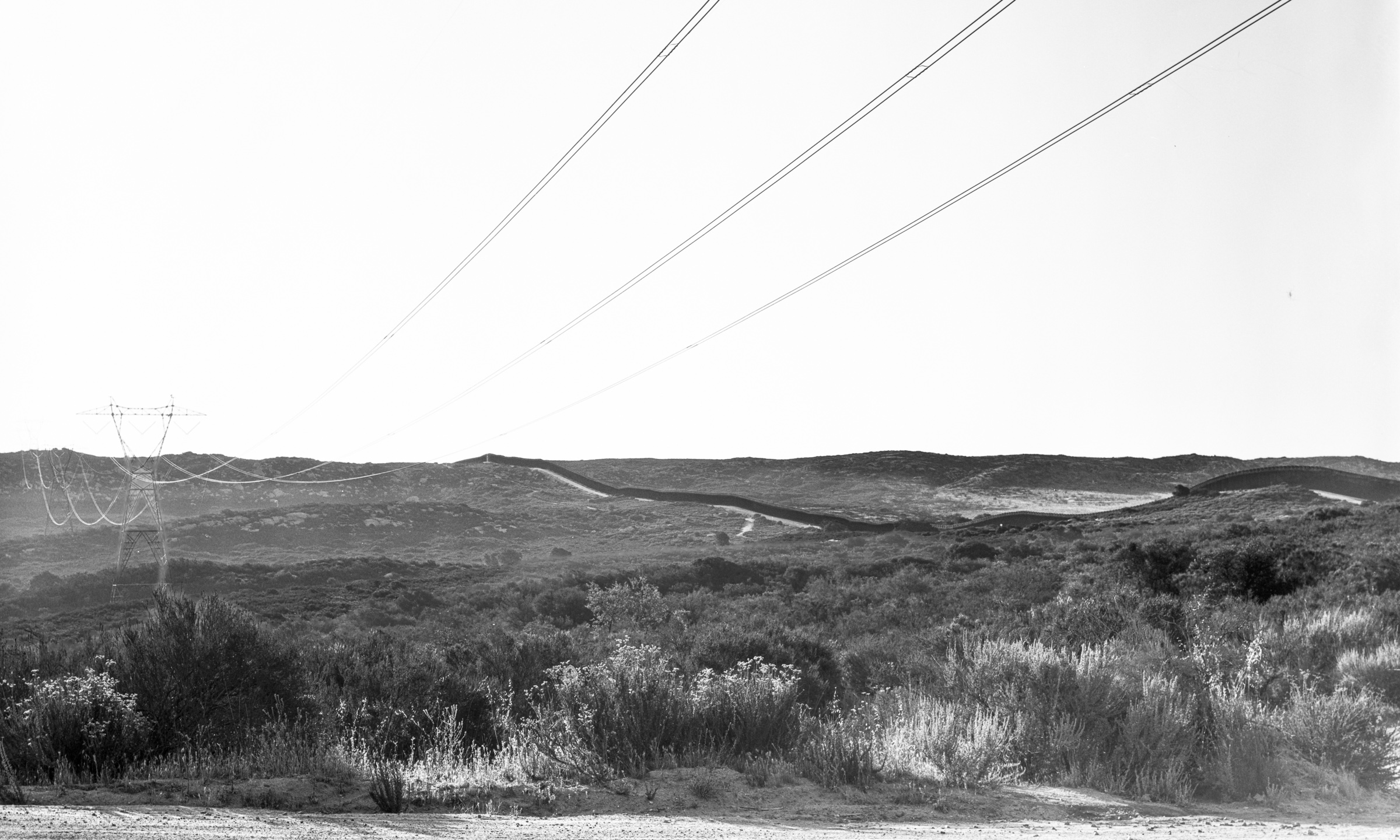
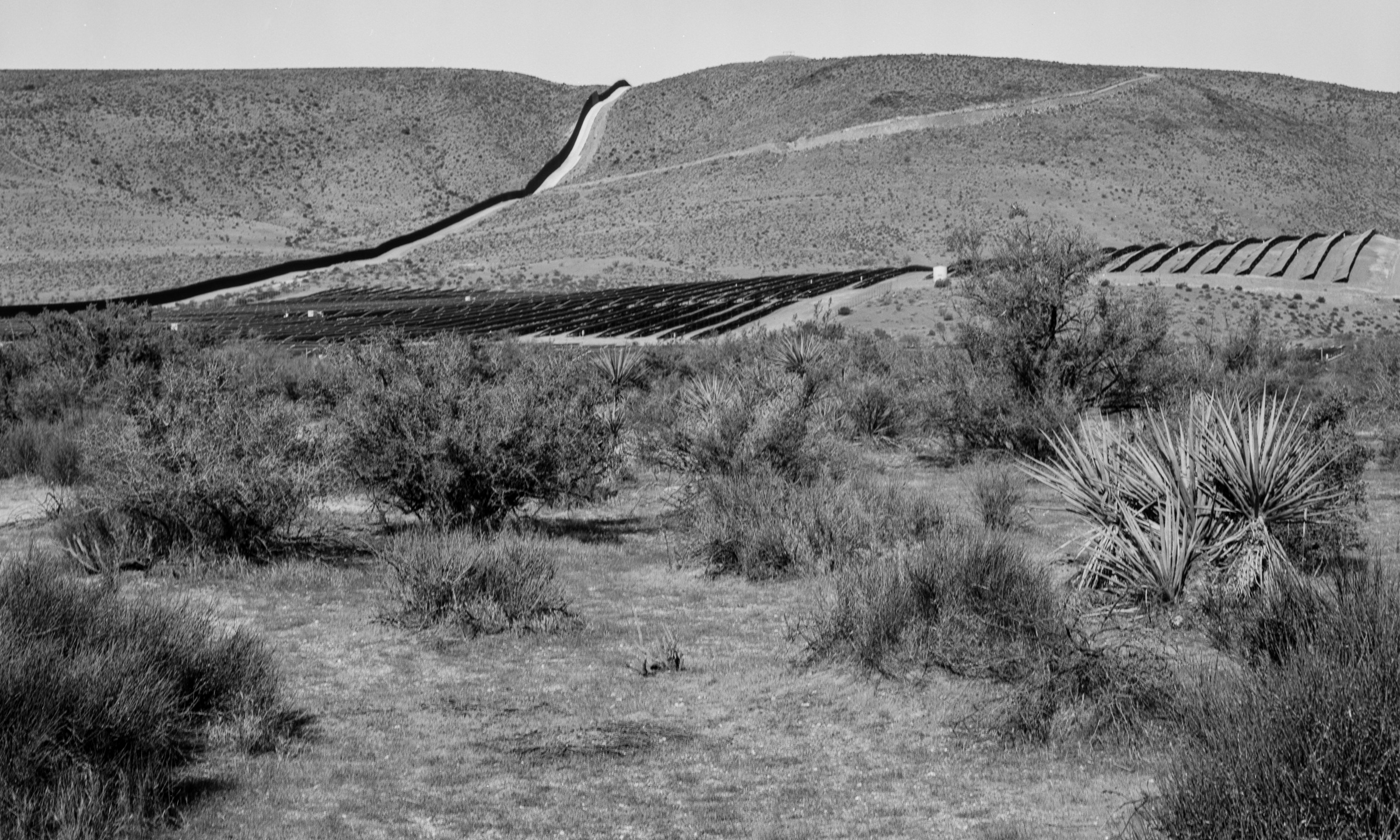
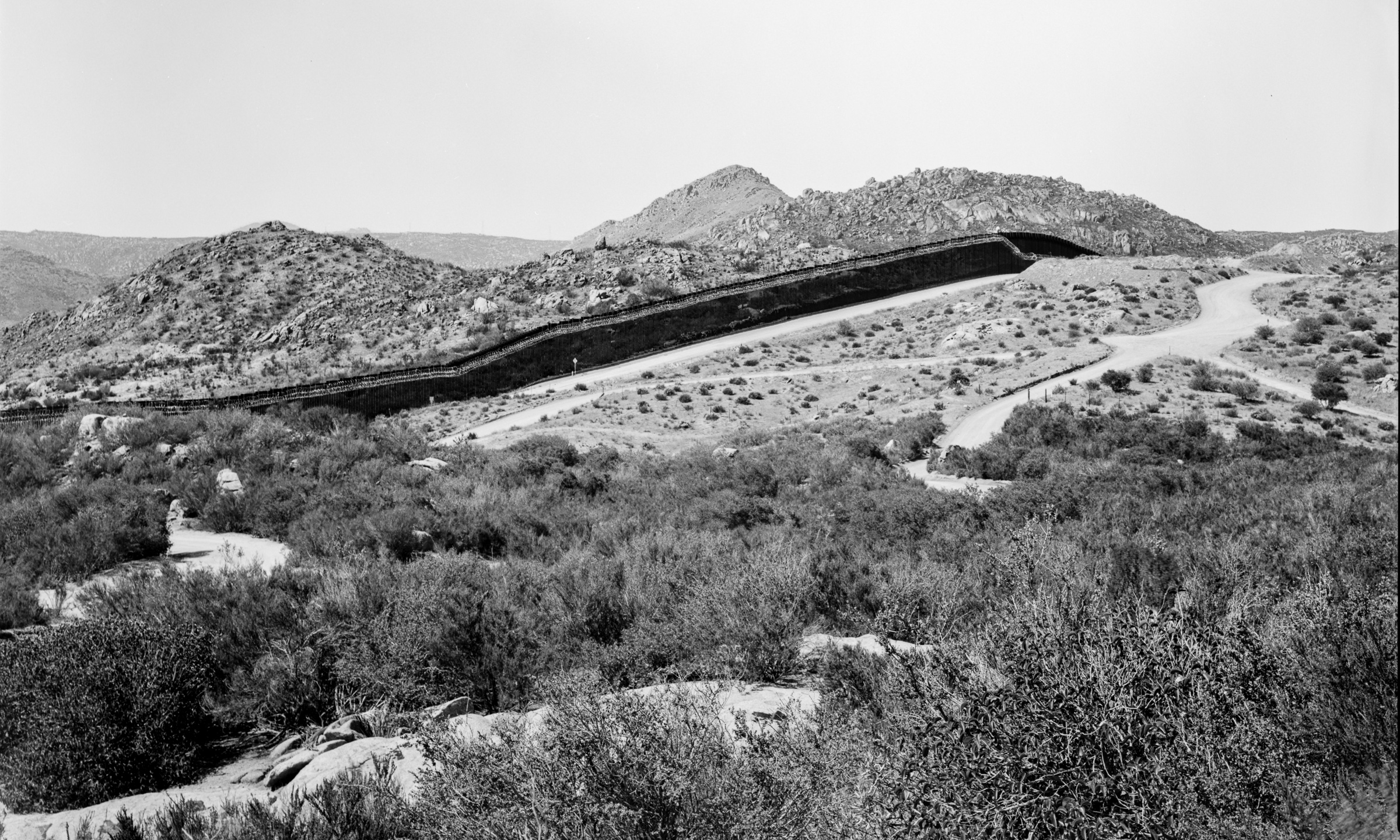
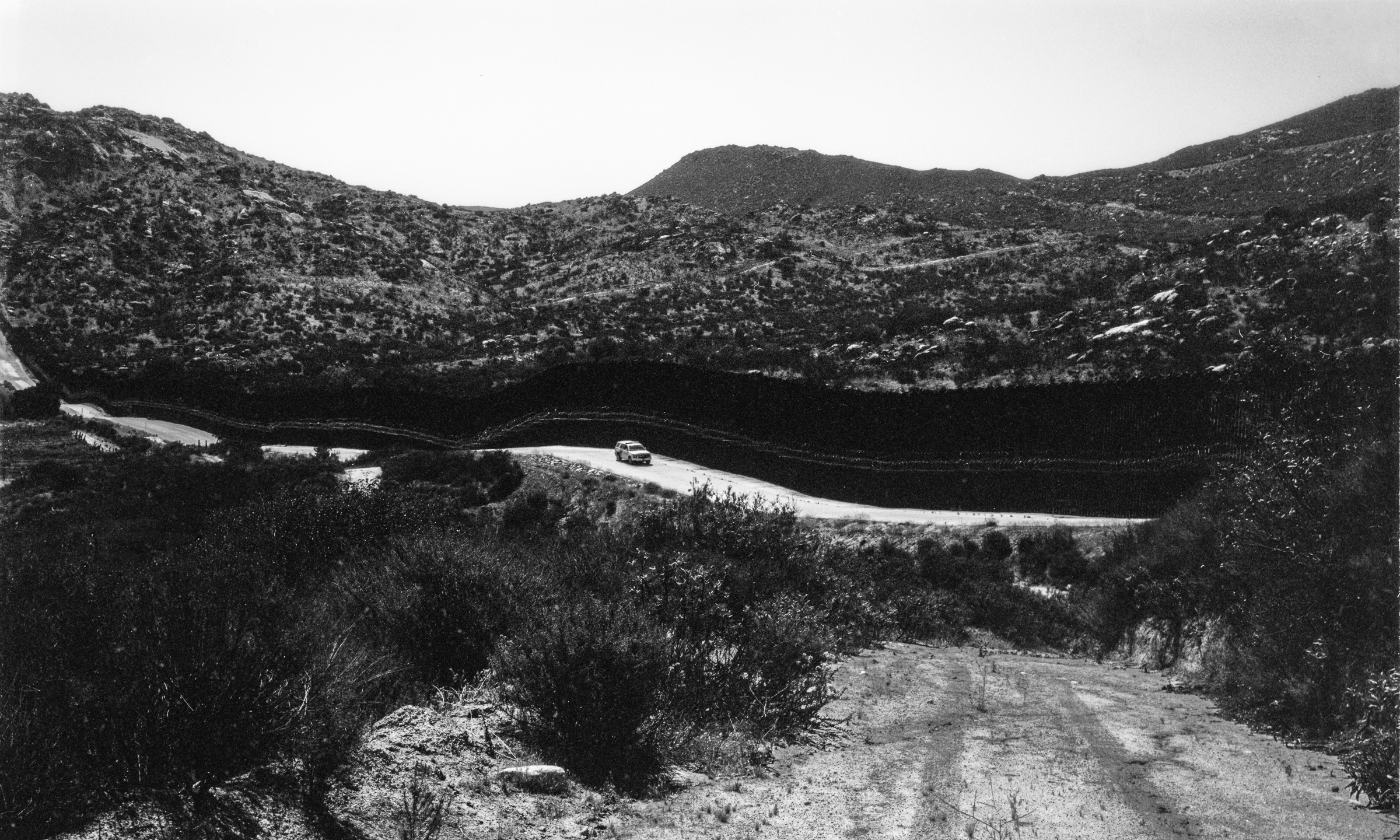
Pigment prints from 4×5 black and white negatives on baryta paper, 2026
With the assistance of my husband and my studio assistant, I spent four days retracing a 137 mile stretch of the route taken by Edward Weston and Charis Wilson Weston along the US/Mexico border during his first Guggenheim Fellowship in 1937 (Quinn and Stebbins, Weston’s Westons: California and the West, p. 38). Like Charis and Edward, my husband drove while I kept my eye on the landscape as it rolled past, my 4×5 view camera on its tripod tucked between my legs. I was looking for Westonian landscapes in an effort to test whether the landscape genre could still sustain itself under the puncture of the wall.
When Weston traveled through the same geography, there was no border wall, and the line between the United States and Mexico could be crossed imperceptibly outside the official checkpoints. He could walk out into the landscape, find himself in Mexico without knowing it, and make photographs that transformed a contested territory into images of modernist transcendence. Those images, regardless of their geopolitical reality, were readily folded into the myths of California, modernism, the Guggenheim Fellowship, and Weston himself. In attempting to repeat the gesture, I encountered an administered landscape under constant surveillance, shaped by tourism, industry, and the political economy of the border. Billions of dollars have been routed into a desert apparatus of fences, vehicles, contractors, and detention centers, converting the borderland into both a moral theater and a marketplace. I searched for images in the landscape, and though the land remained, the modernist act of looking had become compromised by the weight of what it was forced to see.