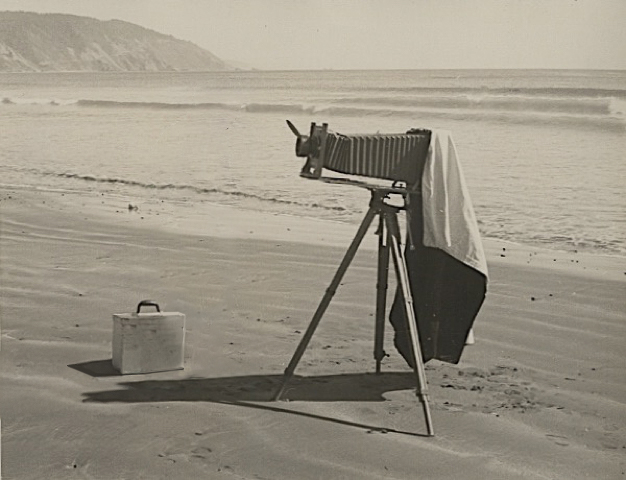
Field Camera
Pigment prints from appropriated archival images on luster paper, 2026
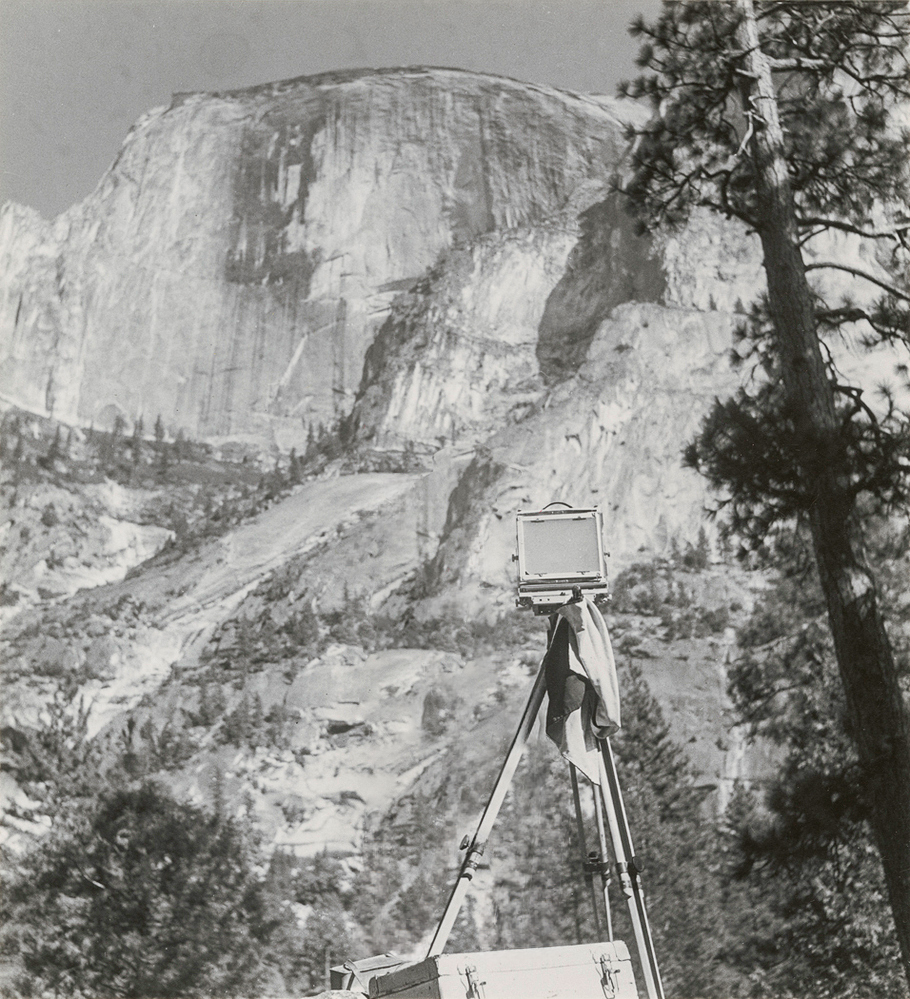
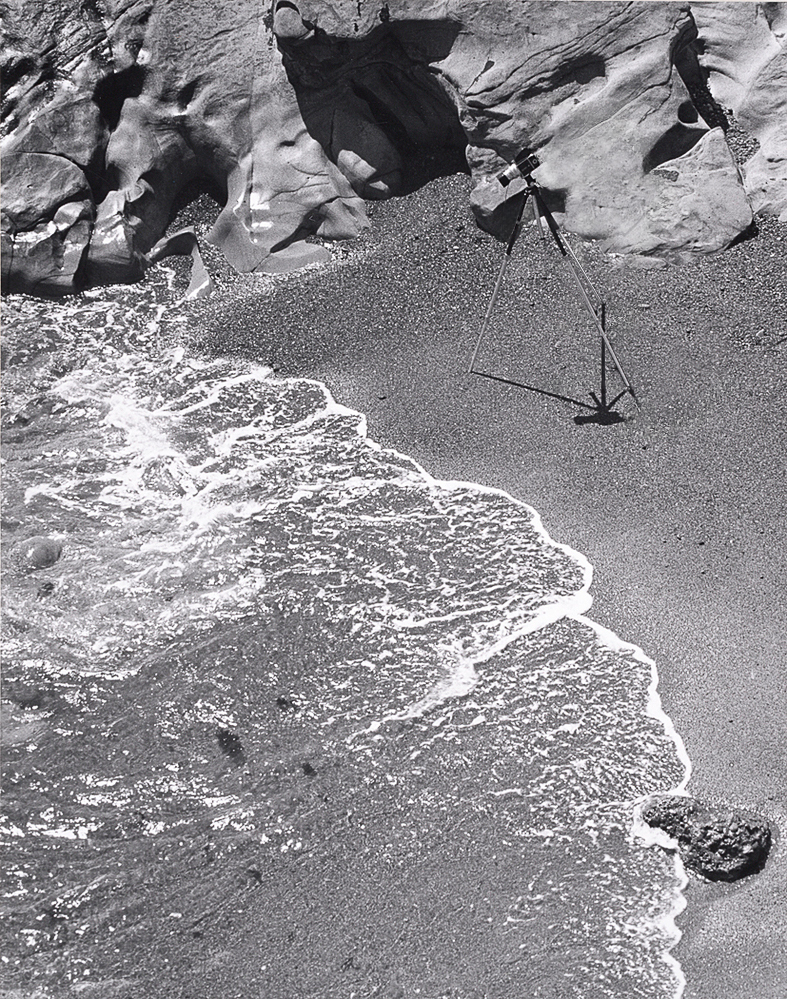
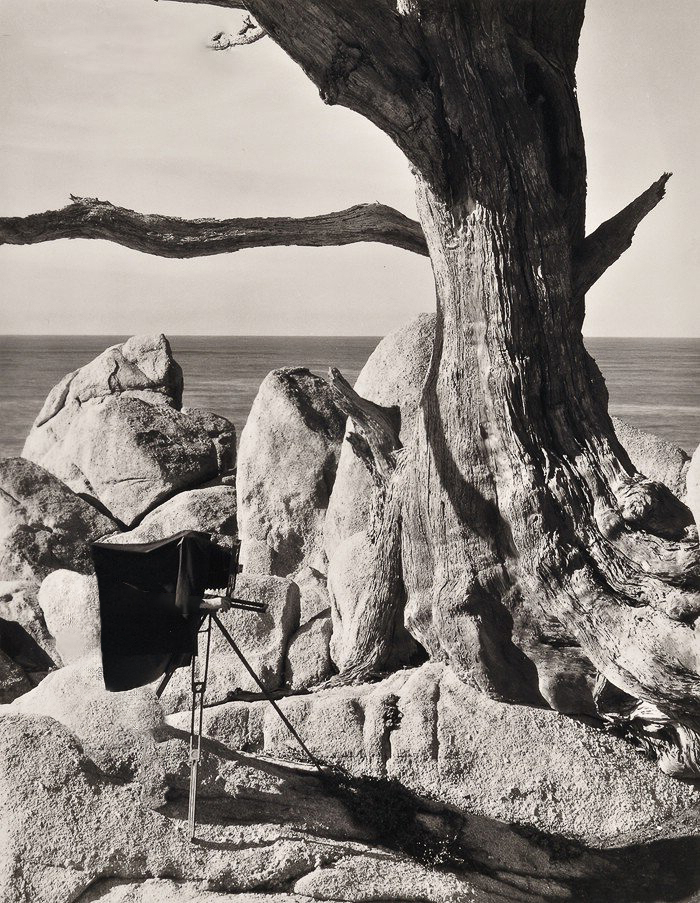
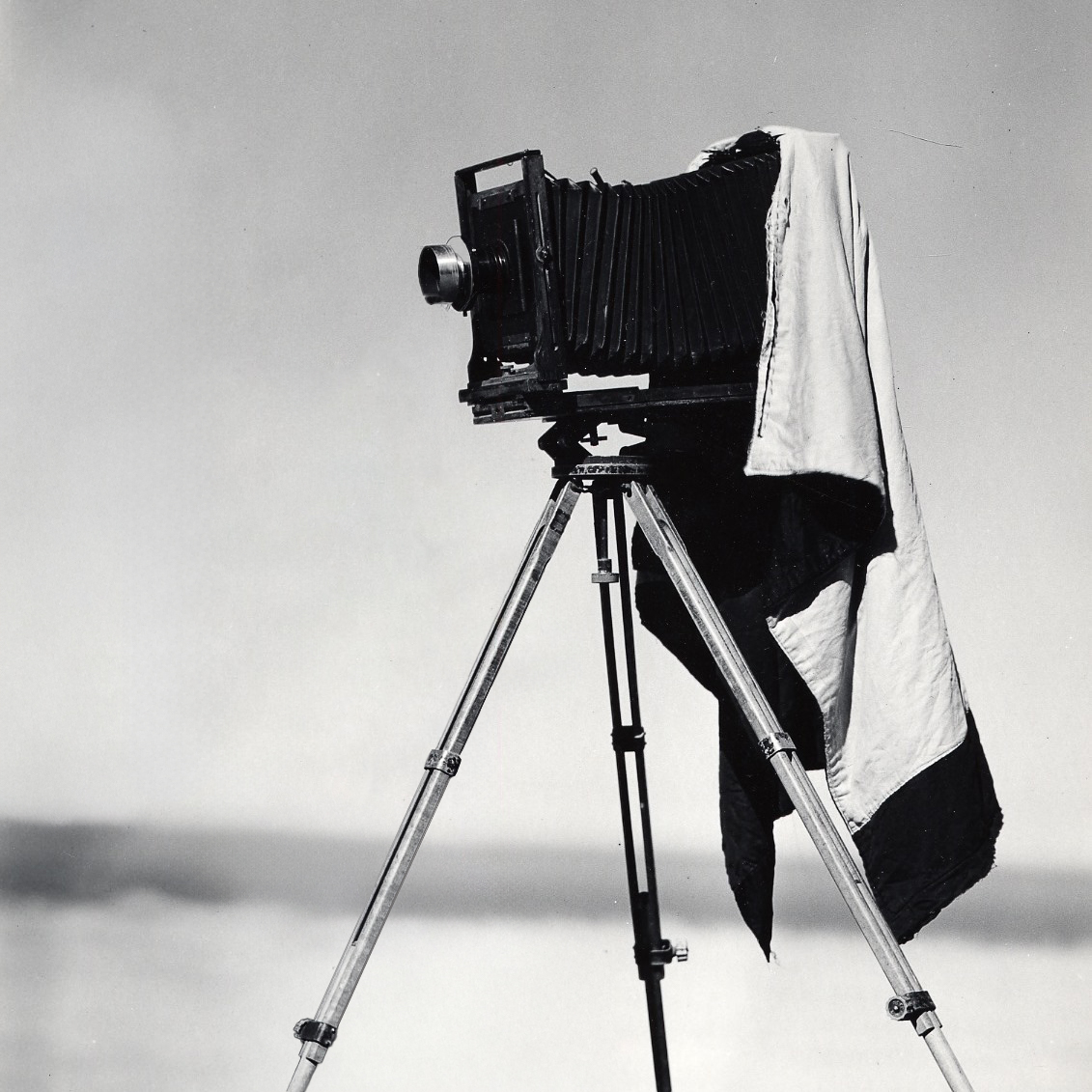
I sourced images from a variety of online archives that show modernist photographers at work in the field and then circulate as images of photographic authority. As secondary images of authorship, these pictures become currency in the production of the serious modernist photographer at work, often without regard for the actual images that are ostensibly being shot by the depicted photographers.
In Photoshop, I intervene in these images by removing the photographer’s body, leaving behind the now-solitary photographic apparatus. The untouched images mobilize the landscape in service of the photographic myth, becoming a kind of devotional form where presence, photographic apparatus, and terrain are synthesized into the uniquely American myth of the heroic landscape photographer. The photographer enters the landscape in solitude with his camera, struggles against the elements and the ritual difficulty of the view camera, and returns to civilization having domesticated the landscape through capture and distribution. Through Weston and Adams in particular, the American West became a staging ground for photographic myth, one that often bears an uneasy resemblance to earlier colonial images of conquest and expedition.
Even though they are staged social images made by another camera and another photographer, the hermetic logic of the Weston or Adams myth is so complete that these images of them at work seem to have simply occurred as natural documents of their artistic process. Their existence undermines the very myth they appear to confirm: that of the solitary male genius who earns his artistic authority through direct encounter with the land. And yet, the myth is so powerful that their presence converts the landscape into authorship. Weston standing before a rock, dune, or horizon makes the scene legible as a Weston before we know what photograph he may have been making, if any were made at all. The land becomes branded by the body of the photographer and folded into the mythology of his name.
Once the photographer is removed, however, the picture becomes an unstable field. The landscape is no longer guaranteed by the body that had authored it through presence alone, and so the camera is left to absorb the aura that once belonged to the man. What remains is not simply an empty scene, but a picture from which the signature has been excised. The apparatus becomes both relic and surrogate body, and the image moves through tension, expectation, and the melancholy of the abandoned instrument.
My own position is not outside that mythology, and my work courts the thing it troubles as it enters the myth knowingly and against itself. Field Camera is therefore not only an act of critique or iconoclasm, but an excavation of photographic authorship as a social image staged by the many pictures that teach us what a photographer is supposed to look like.