Museum Glass
Pigment prints from DSLR captures on uncoated paper, 2026
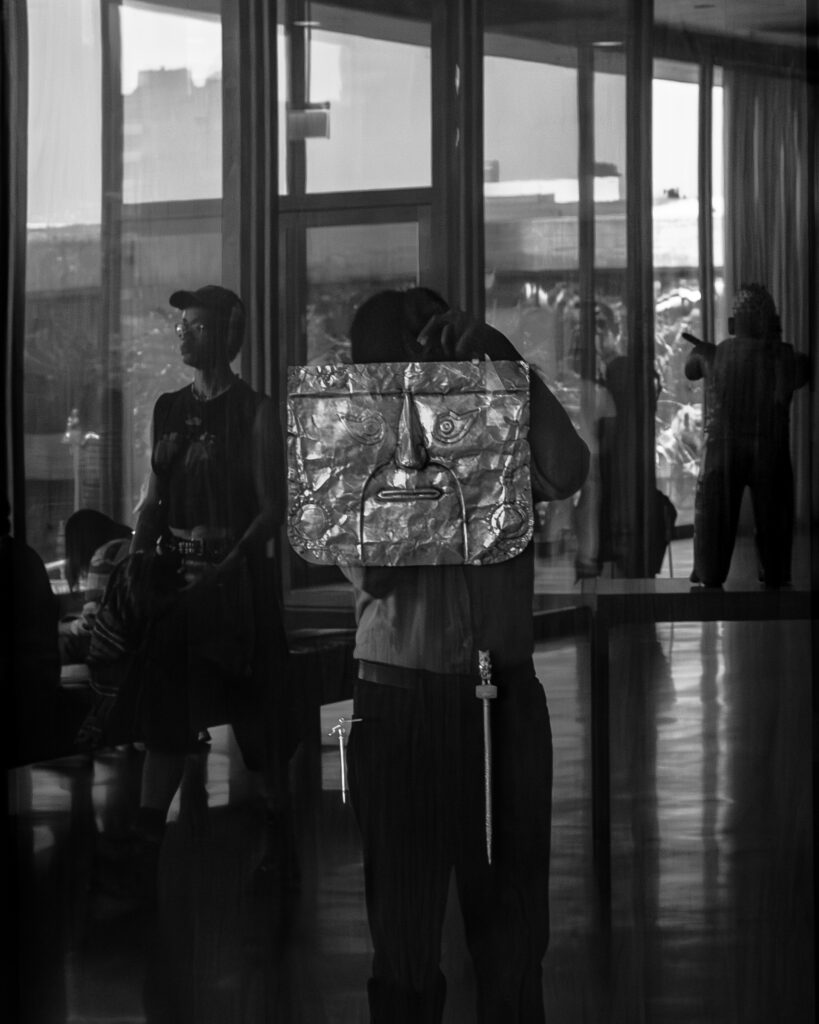
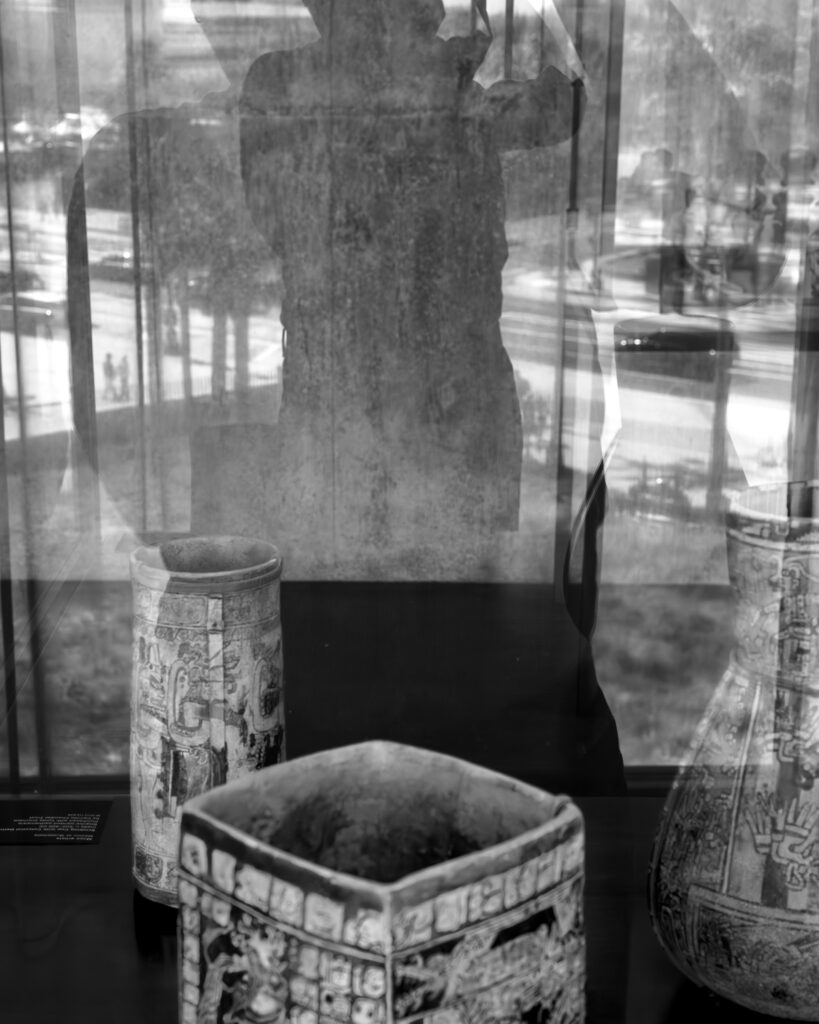
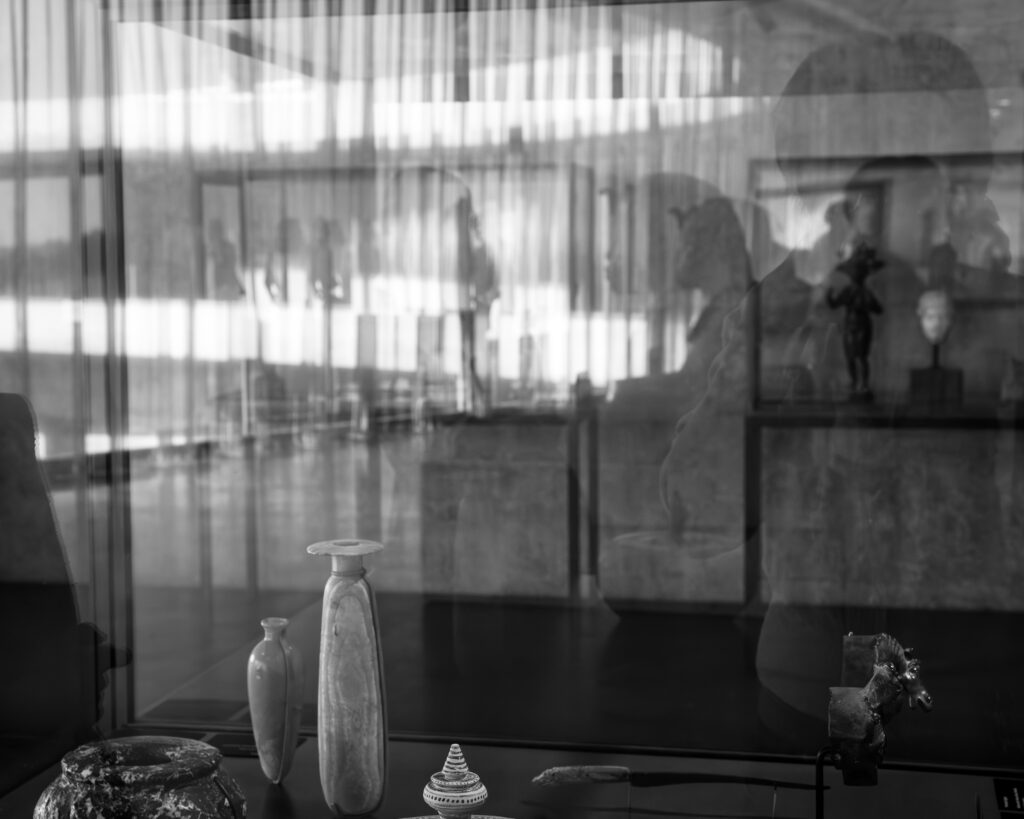
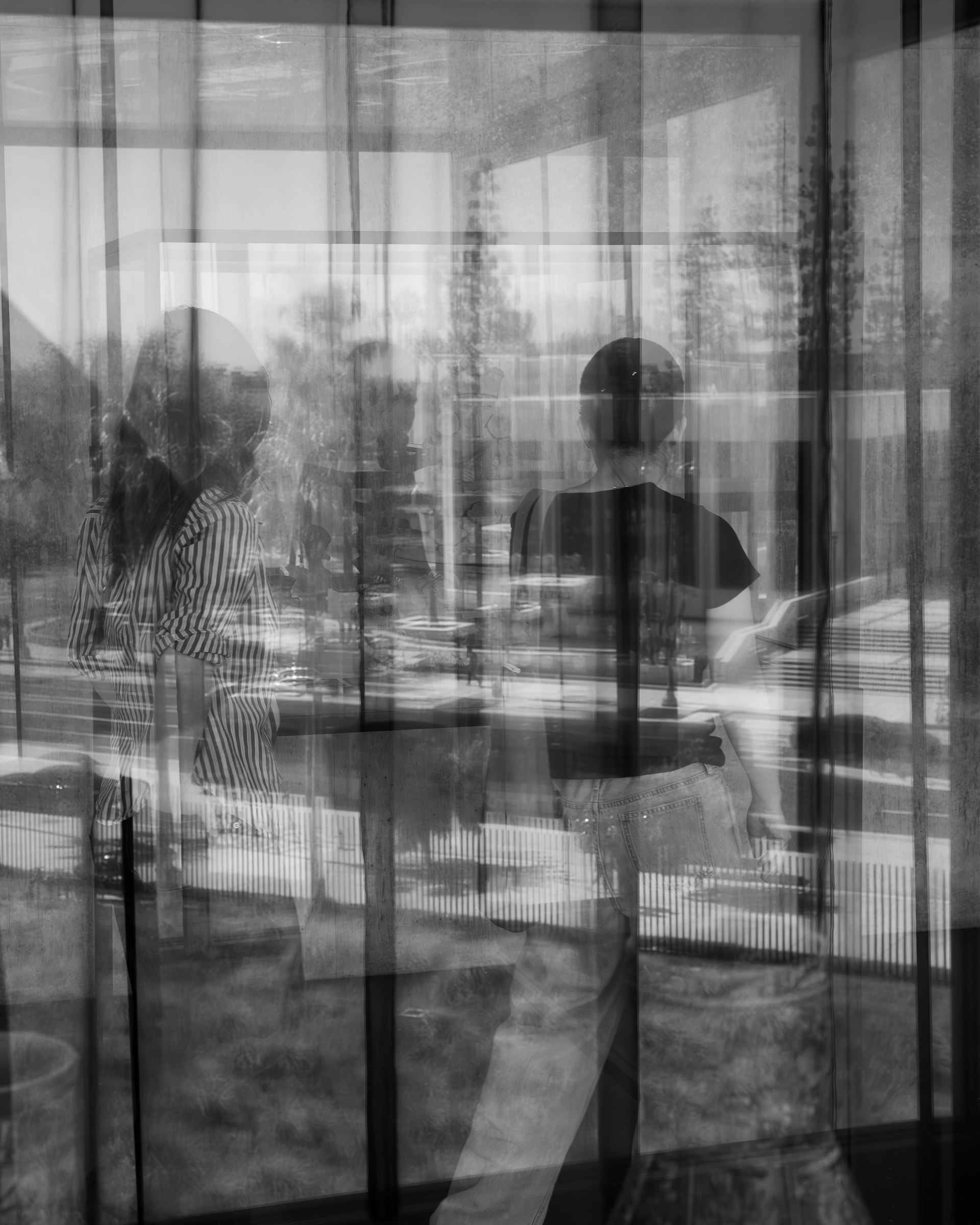
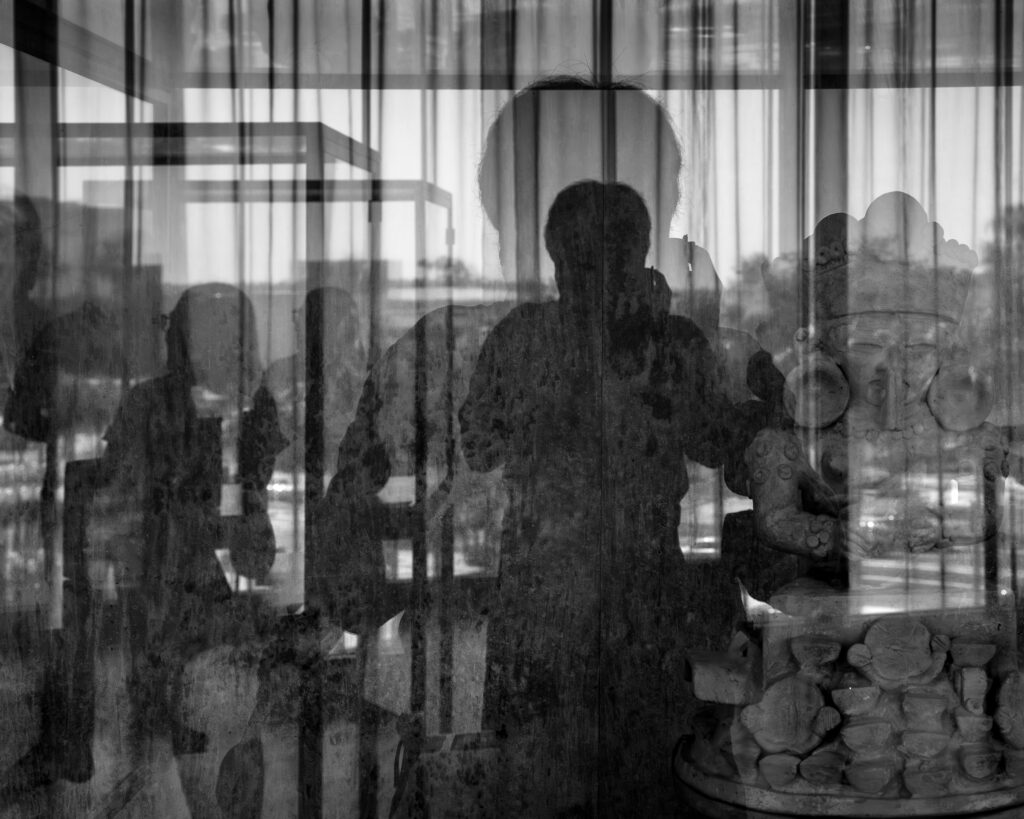
I visited the new LACMA galleries and was struck by the amount of glass that surrounded me. I had grown accustomed to the old LACMA buildings, where the museum’s holdings of Mesoamerican art formed one of my first encounters with the material history of ancestral Mexico. In the new galleries, those objects appeared to me through a different set of conditions, suspended between vitrine reflections, architectural surfaces, and the museum’s glass walls.
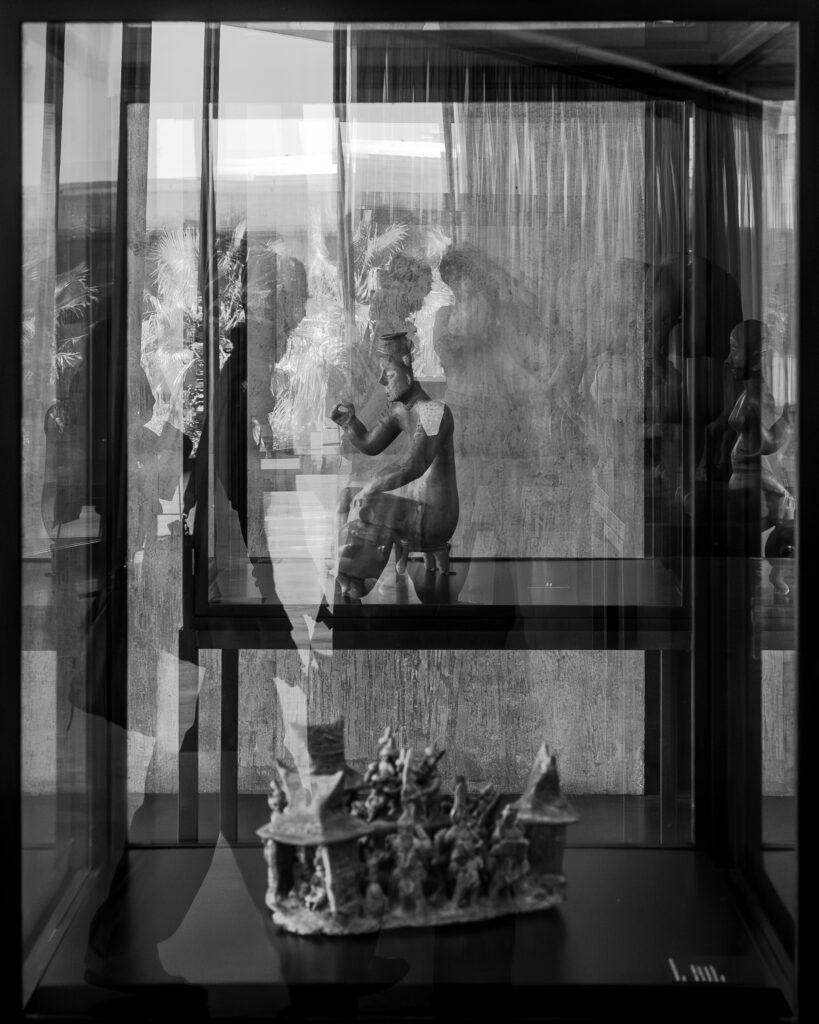
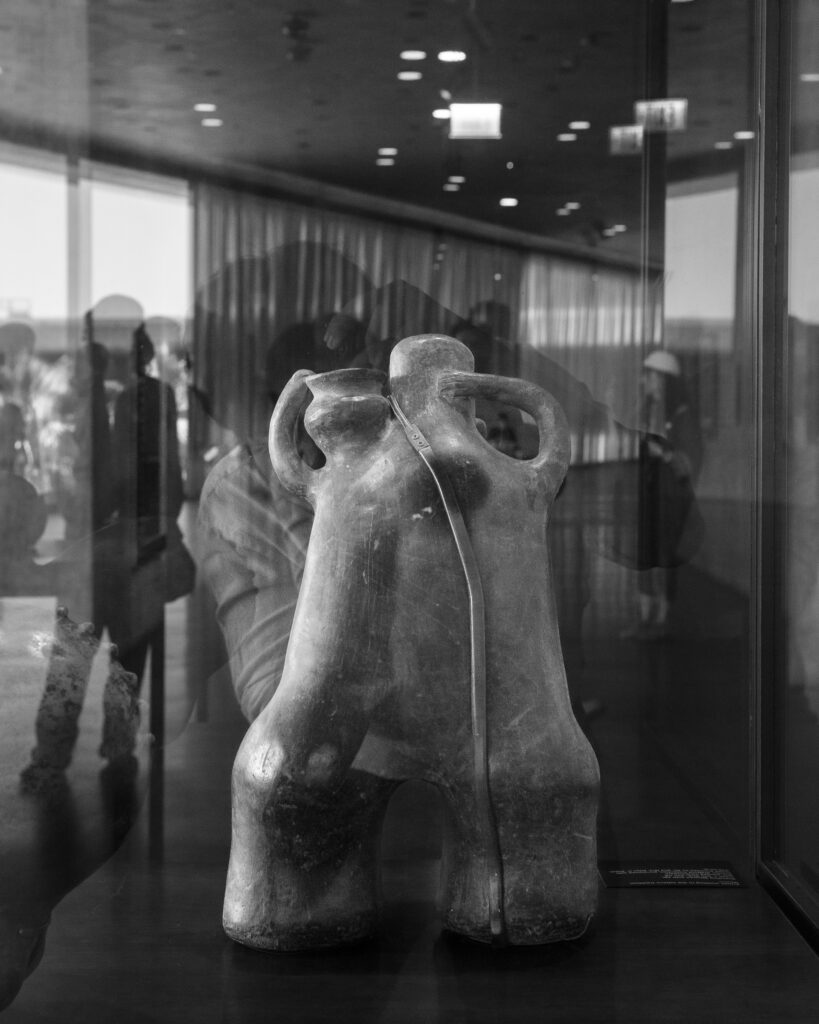
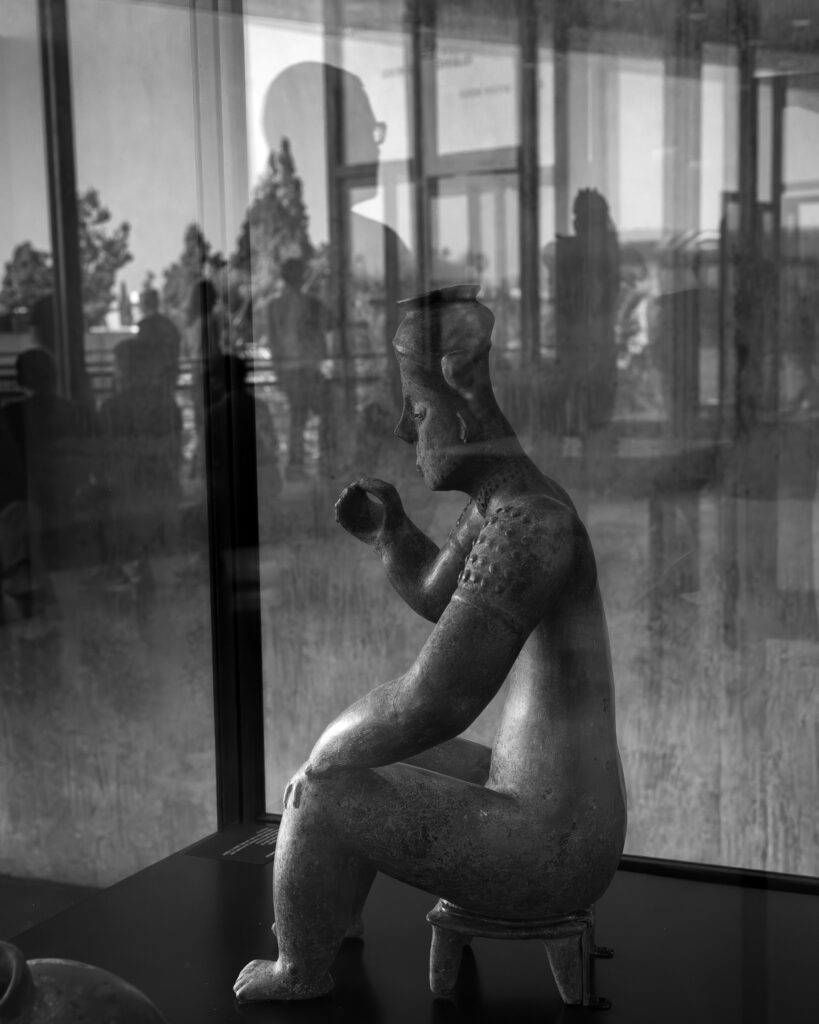
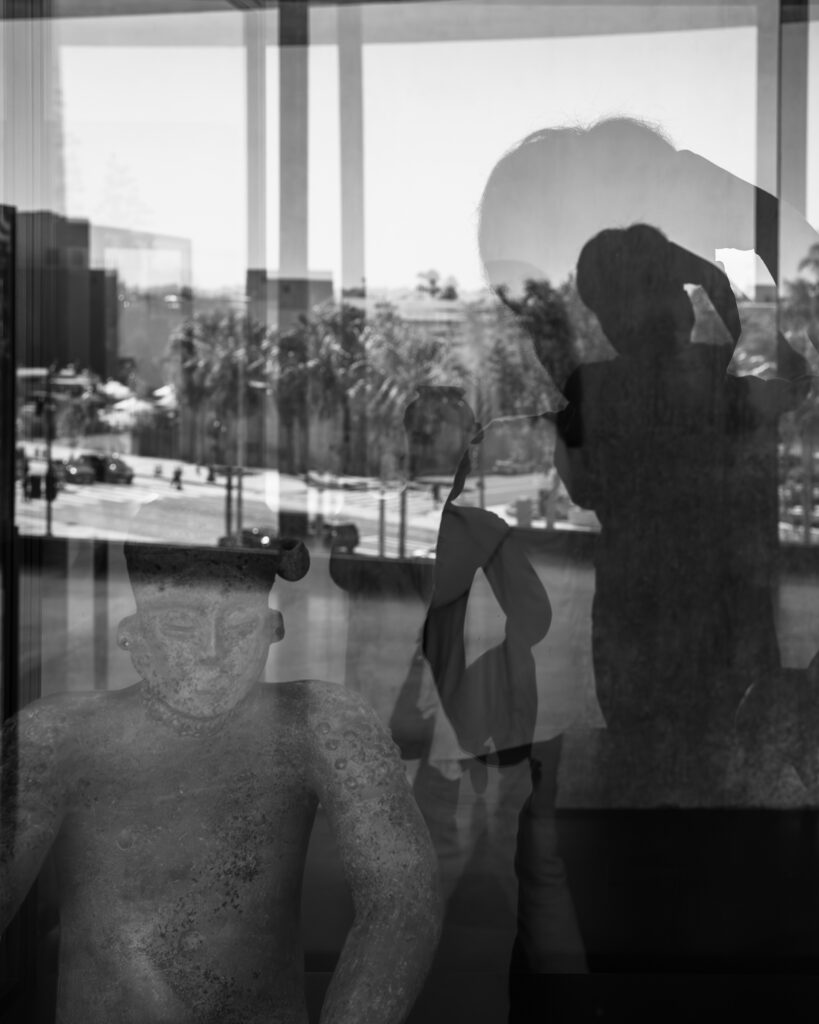
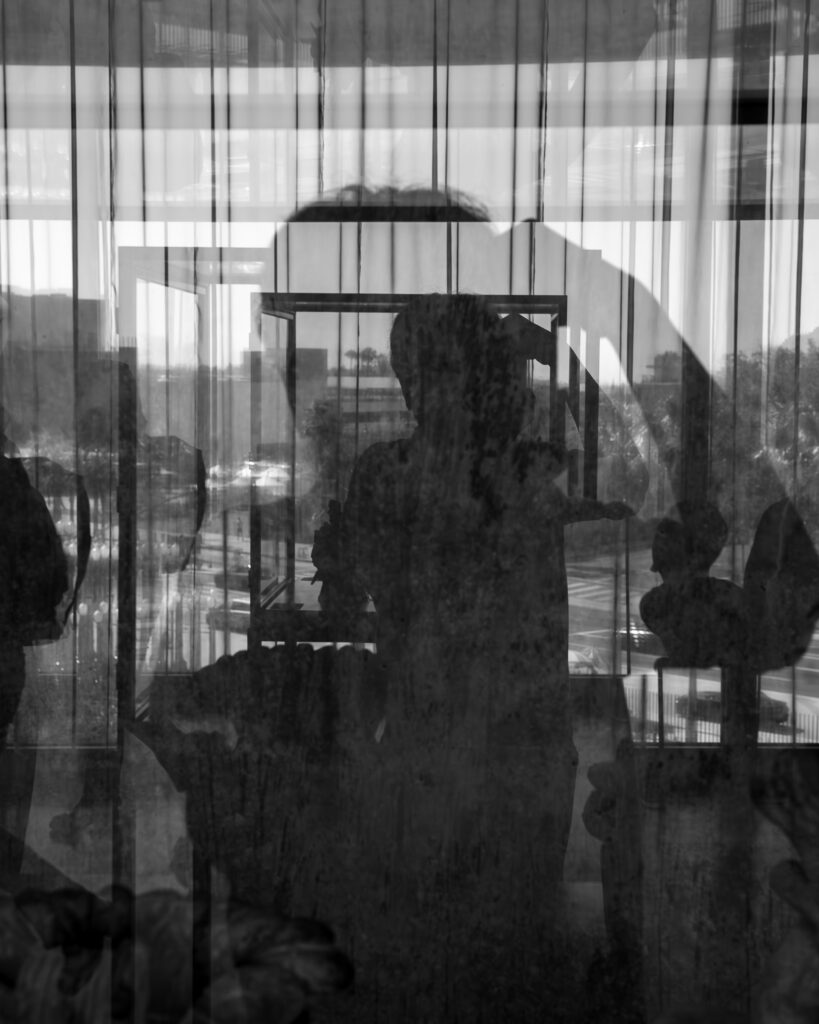
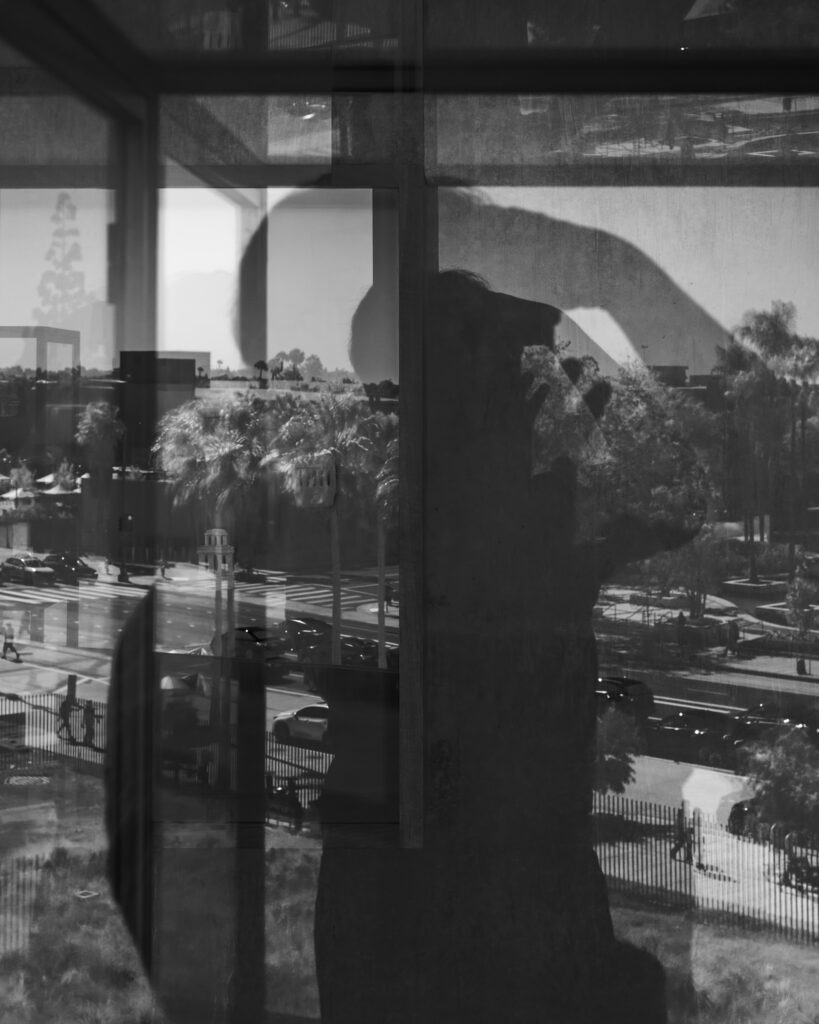
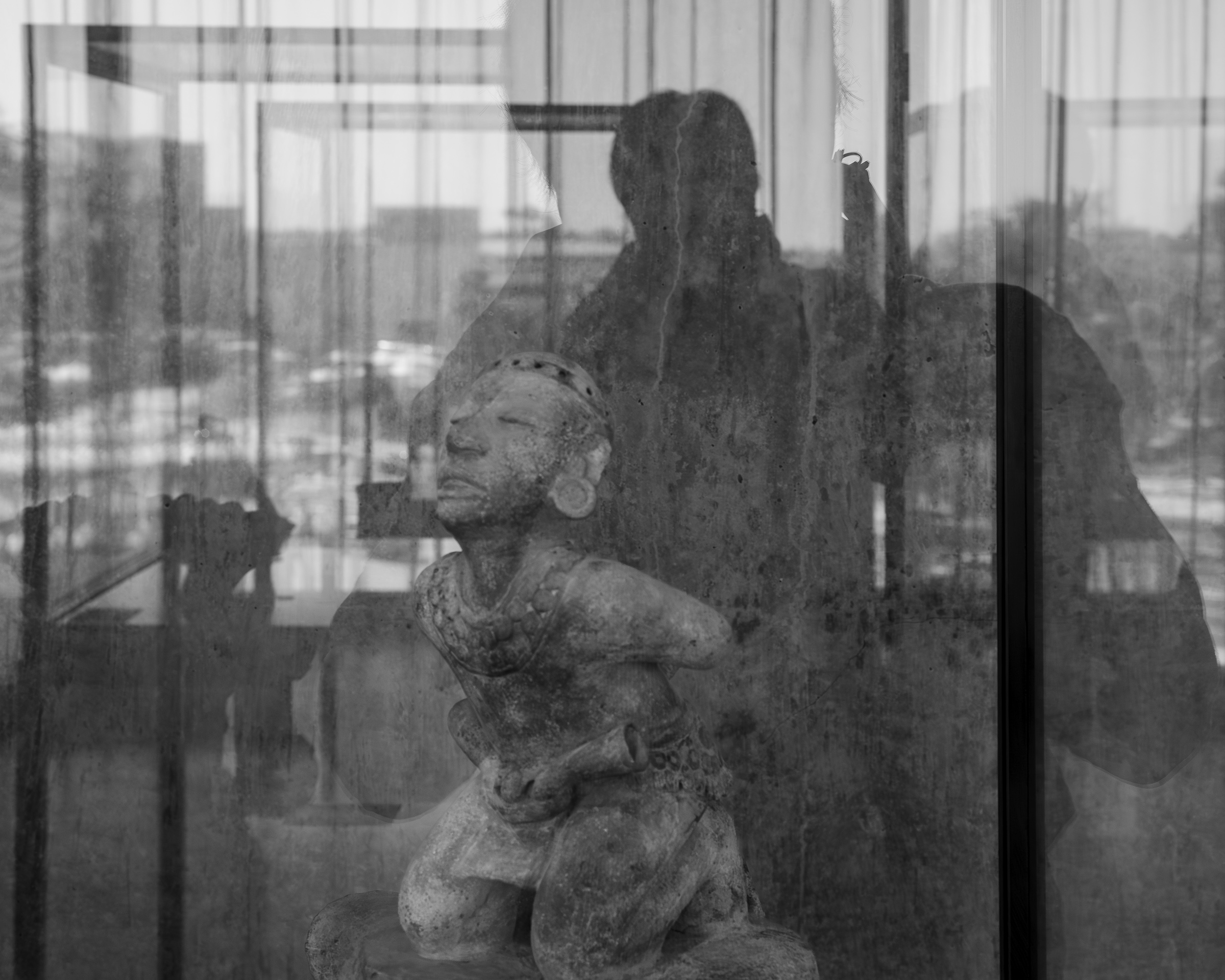
I returned with my DSLR and photographed Mesoamerican objects through the vitrines and reflective surfaces of the galleries. I was trying to look toward objects that had come to signify a displaced ancestral inheritance, but the images instead reflected back the conditions of that desire. The artifacts do not appear as recovered origins, but as objects held inside an institutional apparatus that reveres and possesses even as it preserves and displays.
Part of the ambiguity of these images lies in the uncertainty of the ancestral claim that Mexican history makes on the Indigenous past. Mesoamerican objects are often made to stand in for a generalized Indigenous past, first in the construction of a national Mexican history, and then again in the Mexican-American desire for an inheritance that can be recognized from the other side of displacement. But the civilizations that produced these objects do not map cleanly onto contemporary borders, nations, or identities. For instance, the Mayan past is equally claimed by Mexico, Guatemala, El Salvador, and beyond, while the Indigenous histories of Southern California remain largely outside the mythic ancestry through which Mexican Americans are often invited to recognize ourselves.
Photographed, the surfaces of the museum become an optical machine that reveals and withholds. Reflections collapse artifacts, bodies, architecture, and the city beyond the institution into a single layered plane. The collection might promise access to the past, but the camera records the impossibility of innocent return. Instead, it offers a palimpsest where the past is not denied, but folded into the contentions of inheritance through obstruction and mediation.